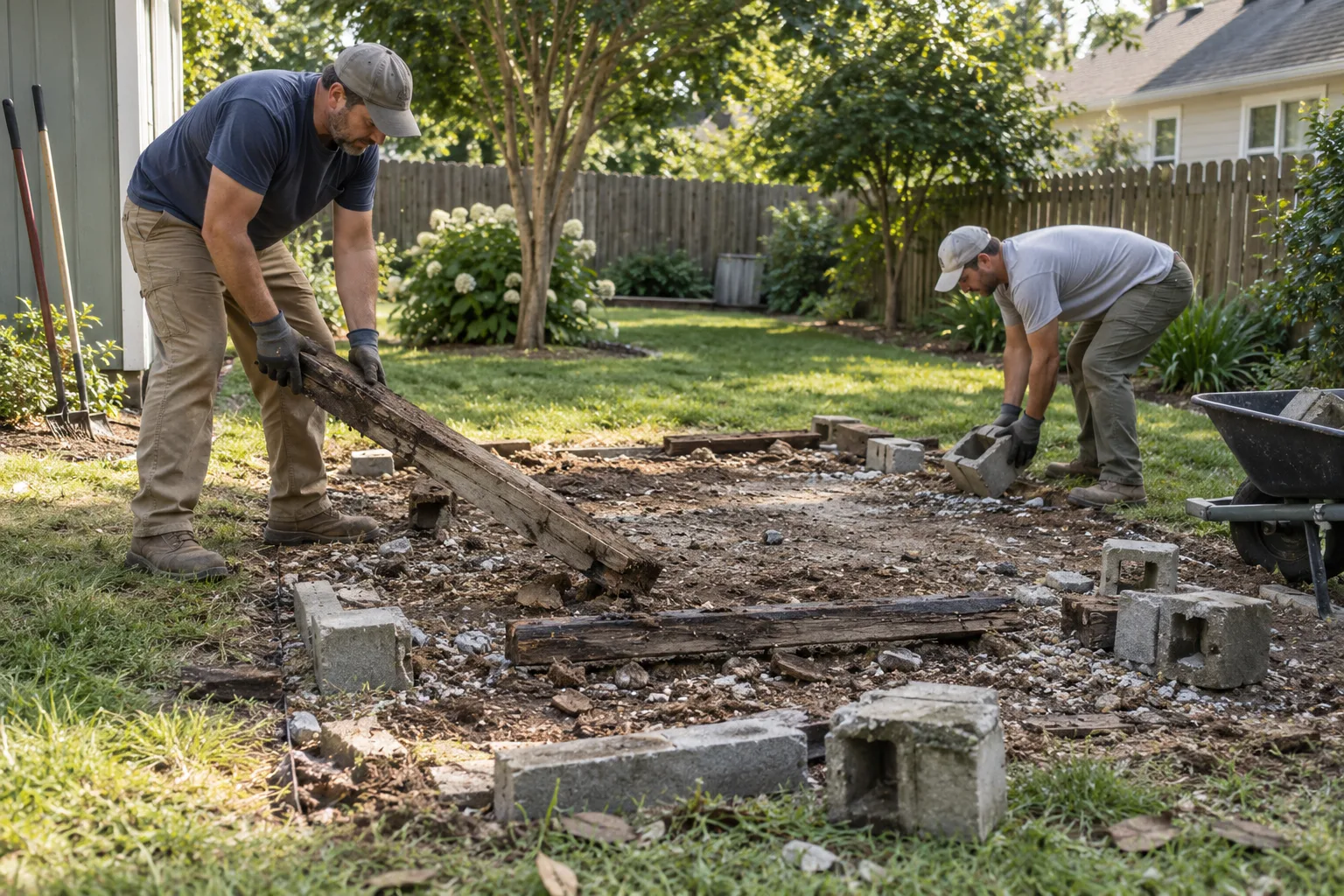
A useful estimate starts with the structure, its connections, and the route out. Record those three things before calling, and a provider can ask better questions without guessing from one distant photo.
Look at every accessible edge
A shed may sit on wood skids, loose blocks, deck piers, ground anchors, pavers, or a poured slab. Photograph the base from each side without crawling under an unstable structure.
Measure exposed concrete
Record visible length, width, and thickness where possible. Show cracks, reinforcement, embedded bolts, and whether the concrete meets a walkway, patio, retaining wall, or another structure that must stay.
Identify access for heavy material
Concrete and masonry are dense. Show the gate, slope, steps, surface condition, and distance to the loading area so the provider can decide whether the work is practical and how it should be priced.
Describe the required finish
State whether loose blocks, anchors, and debris leave; whether the slab stays; and whether grading or new construction will follow. Removal does not automatically include soil, landscaping, or a replacement pad.
Know when the scope needs another trade
Stop and get the right specialist when the work involves active utilities, suspected asbestos, hazardous material, structural support for an occupied building, or conditions that cannot be assessed safely from stable ground. A removal estimate should name exclusions instead of hiding them.
For service scope and estimate factors, see Shed Foundation & Debris Removal. When you are ready, use the estimate planning guide before calling.