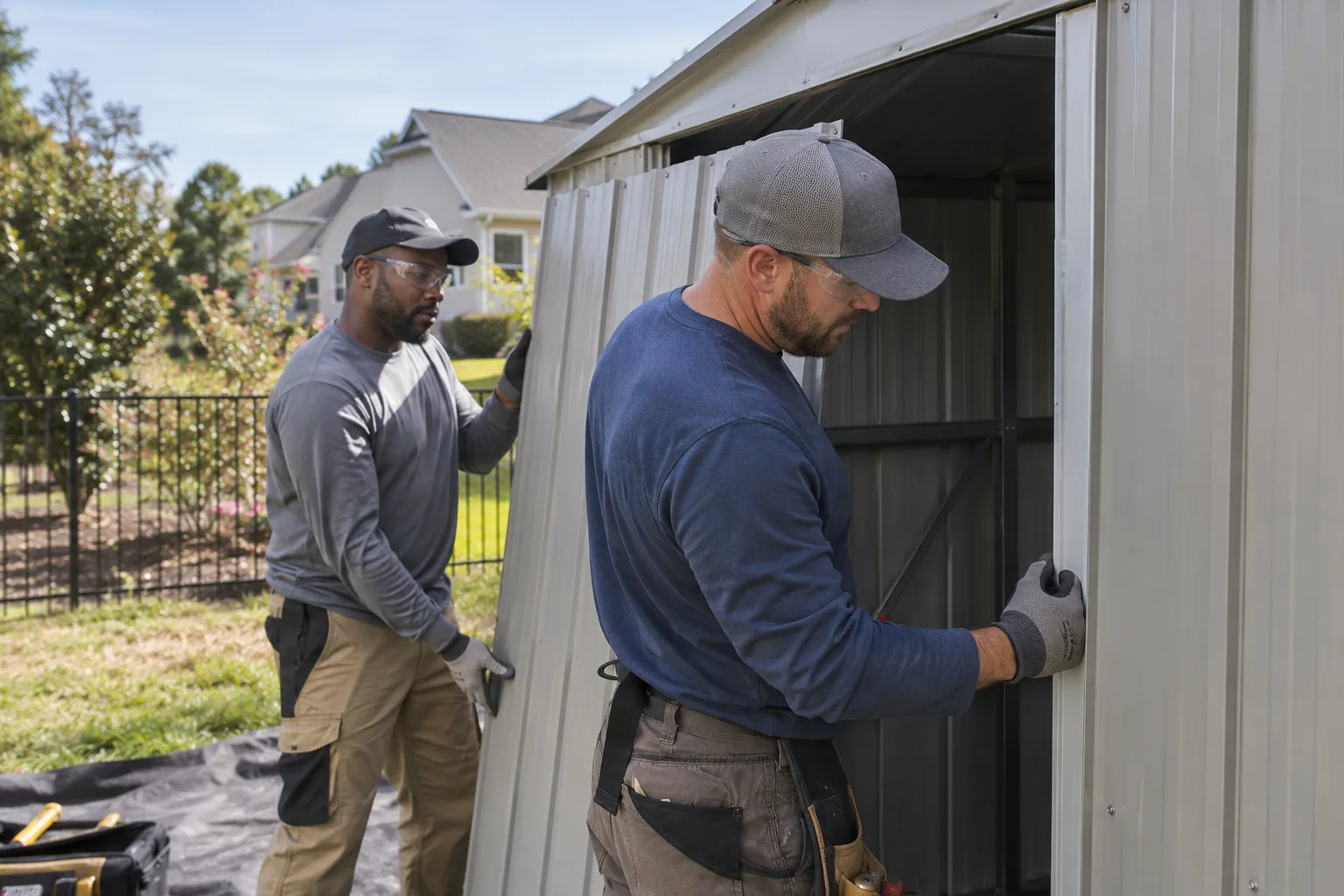
A useful estimate starts with the structure, its connections, and the route out. Record those three things before calling, and a provider can ask better questions without guessing from one distant photo.
Measure the shed and the largest likely panel
Record overall width, length, and height. Then estimate the roof and wall panel dimensions; a disassembled panel may still be wider than the gate or too long for a tight turn.
Show fasteners, rust, and anchors
Photograph lower tracks, roof seams, corner posts, doors, and every visible ground anchor or slab bolt. Rusted connections can change how panels need to be controlled.
Measure usable working clearance
Show the space between the shed and fences, trees, walls, or HVAC equipment. Crews need room to support a panel as it comes loose, not just a path after it is down.
Walk the entire exit route
Measure the narrowest gate and tightest turn. Count steps, note slopes and overhead branches, and identify surfaces that should be protected from sharp metal edges.
Know when the scope needs another trade
Stop and get the right specialist when the work involves active utilities, suspected asbestos, hazardous material, structural support for an occupied building, or conditions that cannot be assessed safely from stable ground. A removal estimate should name exclusions instead of hiding them.
For service scope and estimate factors, see Metal Shed Removal. When you are ready, use the estimate planning guide before calling.