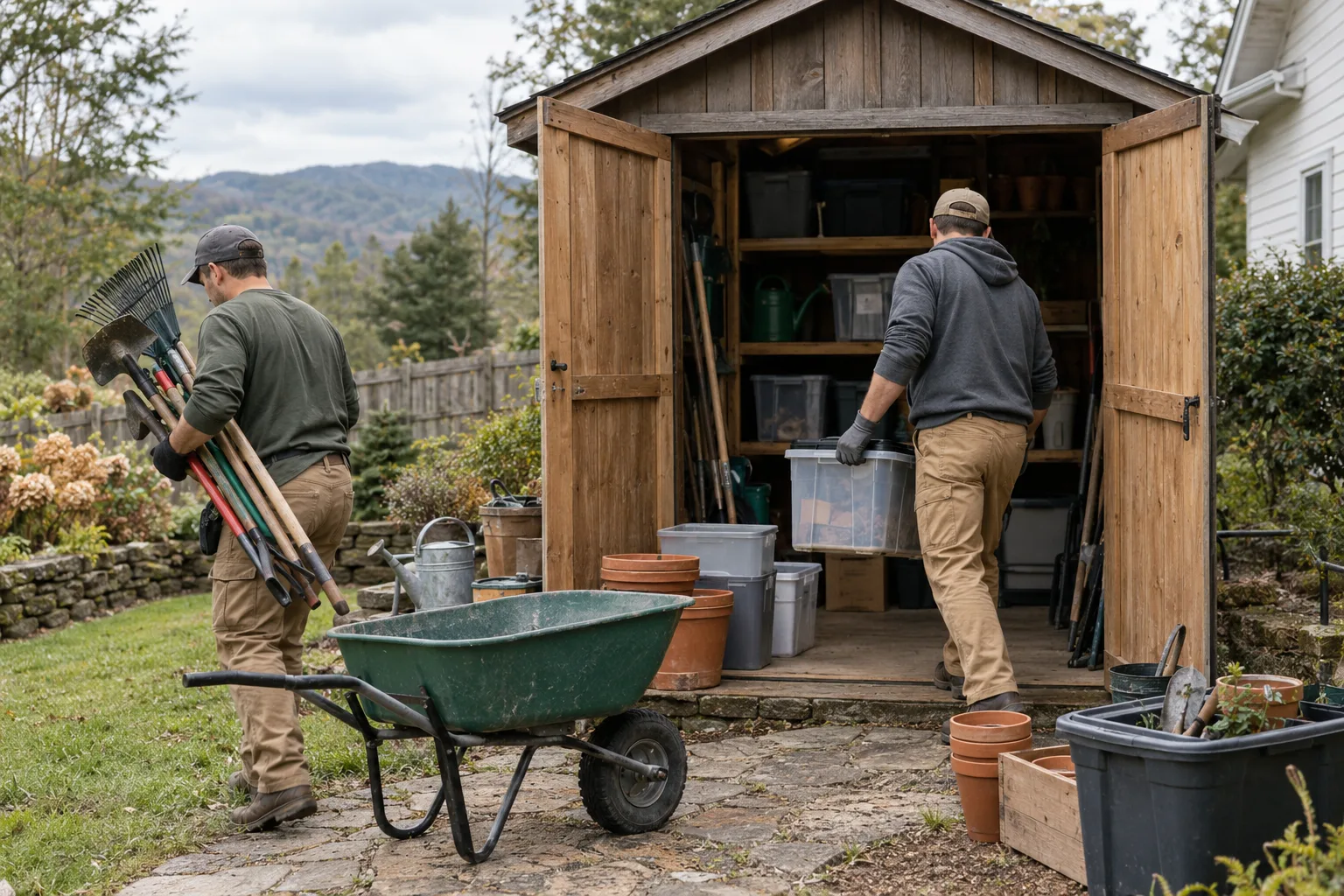
A useful estimate starts with the structure, its connections, and the route out. Record those three things before calling, and a provider can ask better questions without guessing from one distant photo.
Make three visible groups
Set aside items to keep, accepted items to haul, and questionable material that needs confirmation. Do not bury fuel cans, paint, batteries, cylinders, chemicals, or unknown liquids inside a general pile.
Photograph the interior before moving heavy items
Wide photos help show shelving, lofts, tool cabinets, floor condition, and the amount of material. Avoid entering a shed with a soft floor, unstable roof, or signs of pests until it has been assessed.
Keep the doorway and carry route open
Move keepers away from the shed door and clear the path to the loading area. Measure the narrowest gate, note steps and slope, and show any turn that limits carts or large items.
Write cleanout and demolition as separate lines
The estimate should say whether the crew is only emptying the shed, removing the shed after cleanout, or doing both. That prevents stored contents from becoming an unpriced surprise.
Know when the scope needs another trade
Stop and get the right specialist when the work involves active utilities, suspected asbestos, hazardous material, structural support for an occupied building, or conditions that cannot be assessed safely from stable ground. A removal estimate should name exclusions instead of hiding them.
For service scope and estimate factors, see Shed Cleanout & Contents Removal. When you are ready, use the estimate planning guide before calling.